Saison 2026 stechmückenübertragener Krankheitserreger in Deutschland beginnt
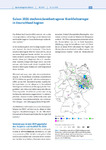
Wie in den Vorjahren wird auch dieses Jahr wieder auf die beginnende Saison stechmückenübertragener Krankheitserreger hingewiesen. In Deutschland gibt es diesbezüglich zwei Herausforderungen: In Teilen Deutschlands zirkuliert seit mehreren Jahren das von heimischen Stechmücken (Culex) übertragene West-Nil-Virus (WNV). Außerdem breitet sich die Asiatische Tigermücke (Aedes albopictus), ein potenzieller Vektor für Chikungunya-, Dengue- und Zikaviren, immer weiter aus. Die Zahl der nach Deutschland importierten Dengue-Fälle lag im Jahr 2025 und im ersten Halbjahr 2026 unter denen der Vorjahre. Chikungunyavirus-Infektionen wurden Ende 2025 und bis Anfang 2026 vermehrt in Reiserückkehrenden von den Seychellen und aus Kuba übermittelt. Im Jahr 2025 traten 4 autochthone WNV-Infektionen auf. Die Ärzteschaft ist dazu angehalten, diese Erkrankungen entsprechend der Risikoeinschätzung der Region bzw. ggf. in Assoziation mit Reisen differenzialdiagnostisch zu berücksichtigen. Start of the 2026 season of mosquito-borne pathogens in Germany
As in previous years, we would like to draw attention to the start of the season for mosquito-borne pathogens. Germany faces two distinct challenges in this regard. First, West Nile virus (WNV), which is transmitted by native Culex mosquitoes, has been circulating in parts of the country for several years. Second, the Asian tiger mosquito (Aedes albopictus), a potential vector of chikungunya, dengue, and Zika viruses, continues to spread. The number of imported dengue cases reported in Germany in 2025 and during the first half of 2026 was lower than in previous years. Chikungunya virus infections were increasingly reported among travellers returning from the Seychelles and Cuba between late 2025 and early 2026. In 2025, four autochthonous WNV infections were reported in Germany. Healthcare professionals are encouraged to consider these diseases in their differential diagnosis, taking into account the regional risk assessment and relevant travel history.
Dateien zu dieser Publikation